
Production cluster
An industrial cyclotron and radiochemistry facilities for radiopharmaceuticals based on fluorine-18 and gallium-68. The plan covers supplies for AURUM’s diagnostic network and other clinics.
A new-generation medical isotope cluster. From in-house isotope production to precision diagnostics.
Isotopes. Diagnostics. Research. Digital health.
An industrial cyclotron and radiochemistry facilities for radiopharmaceuticals based on fluorine-18 and gallium-68. The plan covers supplies for AURUM’s diagnostic network and other clinics.
Eight PET/CT scanners with a planned capacity of more than 4,000 patients a year. The proposed clinical focus spans oncology, cardiology and neurology, with public programmes considered as a potential payment channel.
A platform for applied research, professional training and academic collaboration. This work is intended to develop technology and expertise within the cluster.
Planned capabilities include AI-assisted image analysis, a digital diagnostic archive and remote consultations. These tools are intended to support medical professionals and collaboration between them.
AURUM is conceived to improve access to molecular diagnostics in southern Ukraine. Bringing radiopharmaceutical production and diagnostics into one system is intended to reduce reliance on external supplies and unnecessary travel for patients.
Diagnostics closer to home and a coordinated examination pathway.
Regional capacity, specialist training and the potential to work with public healthcare programmes.
Participation in medical infrastructure with two planned revenue streams and a phased development approach.
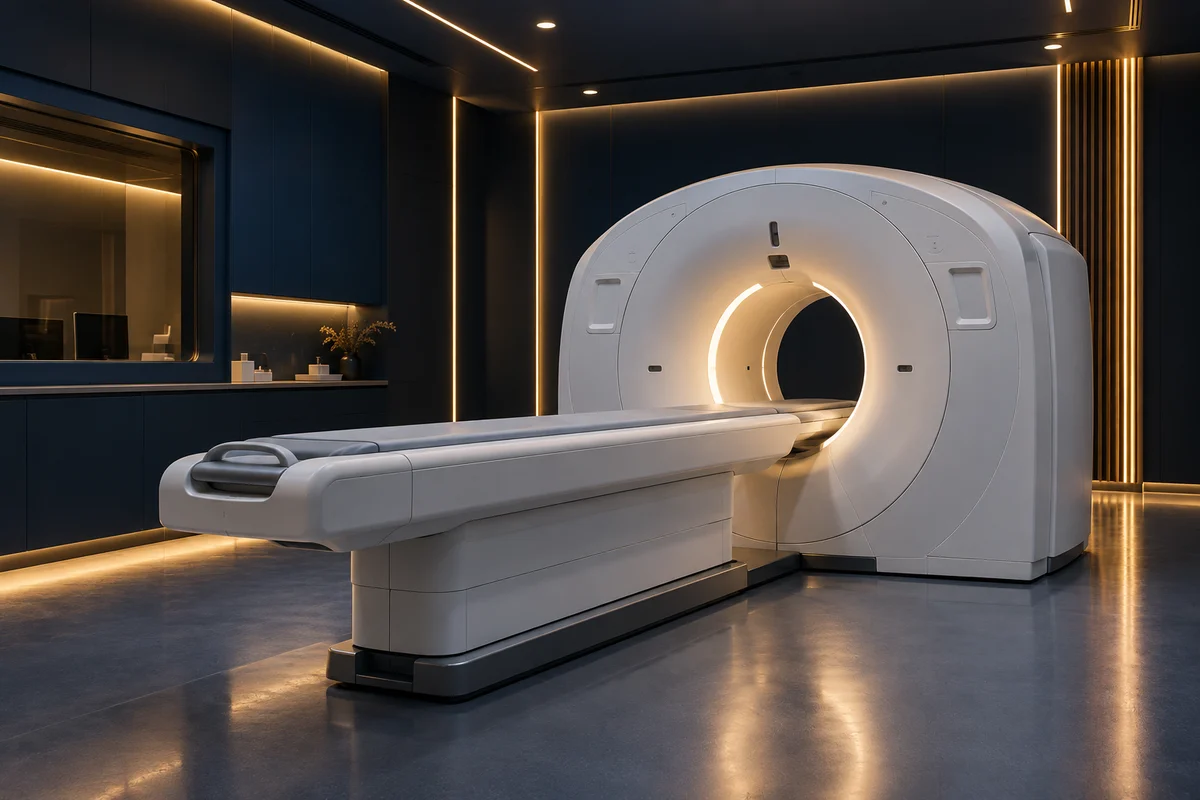
The proposed campus, spanning more than 1,000 m², brings together a cyclotron, radiochemical synthesis laboratory, PET/CT equipment and IT infrastructure. Radiation protection, quality assurance and the necessary authorisations are integral to the implementation plan.
An internal production base is intended to reduce dependence on imported radiopharmaceuticals and improve supply planning.
A single campus is designed to connect technical capacity with patient pathways and specialist teams.
Production, logistics, diagnostics and digital services are planned as interdependent processes.
Planned development directions. This illustration does not represent an operating supply network.
The first phase focuses on establishing the production and diagnostic cluster and beginning patient services.
The next direction is a supply network for other healthcare providers. The presentation sets out a target logistics radius of up to 300 km.
Further expansion is envisaged through cross-border supplies and collaboration with medical networks, subject to the required authorisations and validation of the logistics model.
Planned capital expenditure is allocated across production, diagnostic equipment and campus construction. Each forms a distinct part of one operating system.
A particle accelerator and radiopharmaceutical synthesis laboratory.
Eight scanners, IT systems and planned AI-assisted image analysis modules.
A specialised facility exceeding 1,000 m², with the required engineering infrastructure.
Planned capital allocation from the investment presentation.
The model envisages payments from patients, insurers and, subject to eligibility, public healthcare programmes.
Supply to other clinics is the second planned revenue stream alongside AURUM’s own diagnostic services.
The presentation sets out this target under assumptions relating to internal production and equipment utilisation. It is a modelled benchmark, not a verified operating result or a guarantee of investment returns.
Project Lead
A PhD candidate in public administration with a focus on healthcare, holding a master’s degree in business analytics and project management. The presentation also states a medical education and more than 15 years of business experience.
LinkedInThe AURUM concept draws on research, business analytics and experience engaging with academic and civil society institutions. These disciplines inform the approach to structuring and developing the project.
The presentation identifies EU4Health, Europe’s Beating Cancer Plan and IAEA and WHO approaches as strategic reference points.
The concept relates to Ukraine’s cancer control priorities through 2030 and the Odesa region’s development priorities through 2027, while considering public-private cooperation mechanisms. These are the project’s stated reference points, not confirmation of official endorsement, funding or authorisations.
The dates below reproduce the plan in the original presentation. They are not a report of current progress; updated timing and stage status are to be confirmed in project discussions.
Investment structuring, campus design, licensing procedures and supplier selection.
Construction of specialised facilities, equipment procurement and radiopharmaceutical logistics planning.
Cyclotron and laboratory installation, staff training, commissioning and required authorisations.
Planned start of diagnostic services and B2B supply, followed by digital service development and regional expansion.
For investors, medical operators and prospective partners. Contact the project lead to discuss the concept, potential participation and next steps.
Contact the project leadThe concept, CAPEX allocation, financial model and implementation plan in one document.
Download the brochurePDF · English edition. A translation of the original Ukrainian presentation, including its initial assumptions and implementation schedule.